
Review · MARRAKECH
3D Deluxe Experience: Marrakech to Merzouga w/ Quad Option
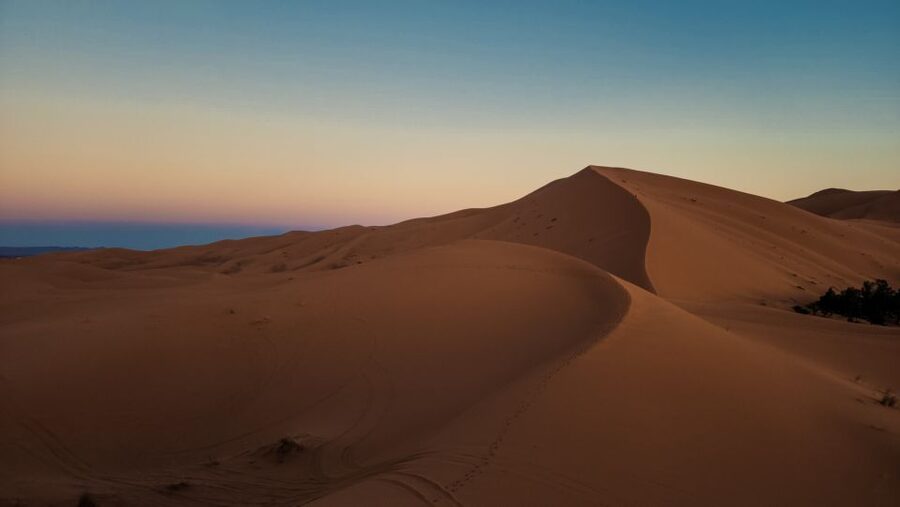
The best part of this three-day trip is the sudden change from Marrakech streets to the open sands of Erg Chebbi. You cross the High Atlas, pass kasbahs and palm groves, then ride a camel toward a desert camp as the sun drops. I like the mix of famous sights and simple local moments, especially the Todra Gorge walk and the evening of Berber music around camp.
I also like the value: for $125 per person, you get transport, two nights of lodging, two breakfasts, two dinners, camel rides, sandboarding, and luggage transfer by 4×4. Guides such as Omar, Addi, Said, Hicham, and Younes have been praised for being friendly and helpful. The tradeoff is time. The return to Marrakech takes about eight and a half hours, and a shared camp can mean basic bathrooms and a busy dining area.
Key points to know before booking
- Camel ride into Erg Chebbi: Ride across the dunes at sunset, then return by camel after breakfast the next morning.
- Ait Ben Haddou and Todra Gorge: Two memorable stops give the trip its strongest cultural and scenic moments.
- $125 includes a lot: Transport, lodging, meals, camel rides, sandboarding, WiFi, and luggage service are covered.
- Shared camp means simple facilities: Standard tents have no air-conditioning, and showers and toilets may be shared.
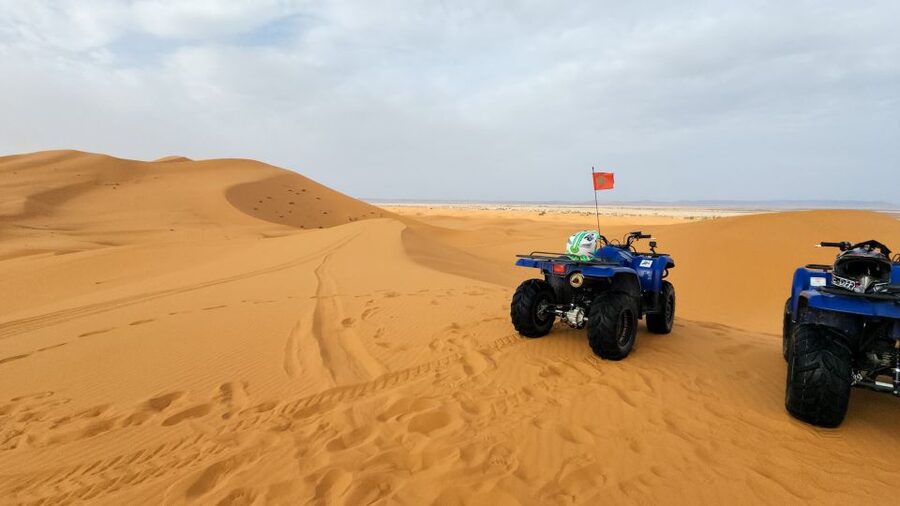
- Quad biking is optional: Add a one-hour ATV ride for €50 solo or €60 for two people.
- Long driving days: The final day lasts about 8 hours and 30 minutes, so this suits you if you value seeing the desert over lingering in each town.
From Marrakech to the High Atlas
Your pickup is arranged from your Marrakech hotel or riad, so send the exact accommodation name and a working WhatsApp number before departure. Pickup is generally in the morning, around 7:00 or 8:00, with one booking reporting a 7:30 collection.
The vehicle is air-conditioned and includes WiFi. Shared departures use a minibus, with enough room for the group and a driver-guide who handles the route and stops. Guides speak English, French, or Spanish, depending on the departure.
The road climbs toward the Tizi n Tichka Pass, the main route over the High Atlas. This is not just a transfer between Marrakech and the desert. You will see mountain scenery, Berber villages, and changing colors in the rock. One account specifically noted naturally purple rock along the way, a reminder that the drive has plenty to look at even before the main attractions.
This first stretch is long, but the route gives you a useful picture of southern Morocco. Marrakech is dense and busy; the Atlas feels much more open. Bring water, sunglasses, and a light layer. Mountain weather can feel different from the heat later in the desert.
More quad bike and ATV tours around Marrakesh:
- Marrakech: Agafay Desert Quad & Camel Rides with Dinner Show
★ 4.8 · 27,382 reviews - Marrakech: Agafay Desert Quad Biking Tour with Dinner-Show
★ 4.8 · 16,569 reviews - Marrakech: Quad Bike Tour to Palm Oasis and Jbilat Desert
★ 4.8 · 11,831 reviews
Ait Ben Haddou, Morocco’s famous mud-brick village
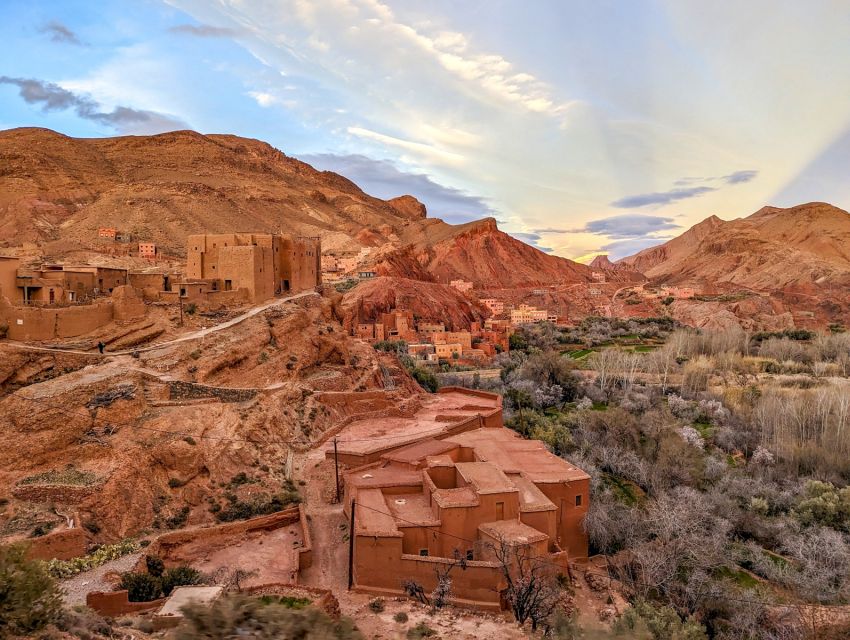
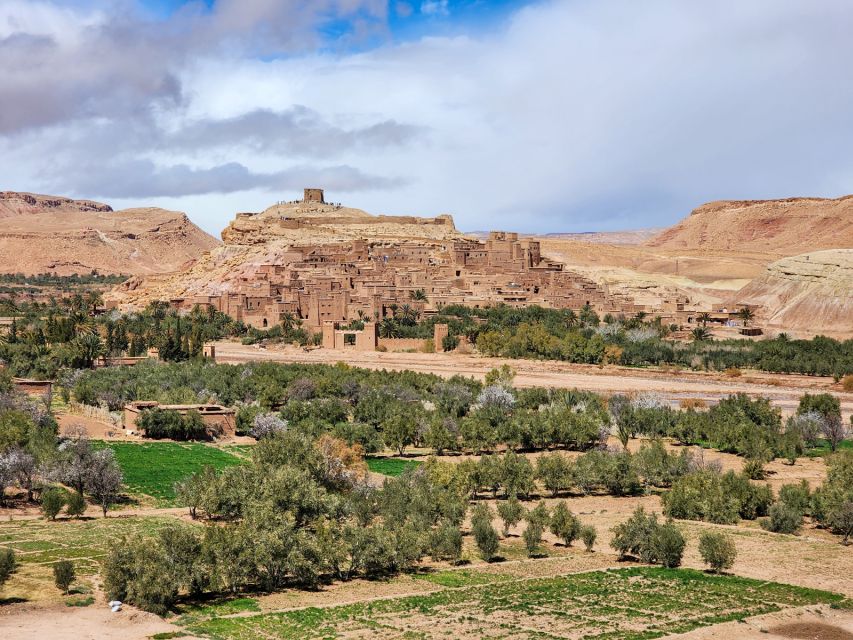
Ait Ben Haddou is the first major stop, and it earns its place on the route. This fortified village, or ksar, is a UNESCO World Heritage Site built from earthen material and shaped by narrow lanes, towers, and clustered homes. Its appearance has also made it a favorite film location.
You will have time to walk around the site, take photographs, and look across the surrounding countryside. On a shared tour, a local guide is not included, but you can join a group explanation for about €2 per person. I consider that small fee worthwhile if you want the history and layout explained rather than simply wandering through the lanes.
Time here can feel short. The driver and group must keep moving toward the Dades Valley, so do not expect a slow, private exploration unless you choose a private booking. Private trips include a licensed guide at Ait Ben Haddou and lunch each day, which makes a real difference if this is one of your main reasons for coming.
Shared departures do not include lunch. The group usually stops at set restaurants, with buffet meals costing about 120 Moroccan dirhams. You can budget for that amount or look for a nearby local option when time allows. Carry some cash, since drinks are also not included.
Ouarzazate, Skoura, and the Rose Valley
After Ait Ben Haddou, the route continues toward Ouarzazate. Private bookings may include a stop at Ksar Taourirt, but it is not part of the standard shared itinerary. The private option also allows extra stops at Telouat Kasbah, Tinghir, and on an alternate return route through Nkob, Tamnougalt, and Agdz.
The shared route continues through the Skoura palm grove and the Rose Valley. In mid-spring, roses may be in bloom. At other times, the value of this section is the contrast between palms, kasbahs, and dry mountain country.
You finish the day near Tinghir or in the Dades Gorges area. The overnight accommodation may be Hotel Saghra, Kasbah Didis, or a similar property. Expect an air-conditioned room or suite with a private bathroom, and some properties have a swimming pool. The pool is more than a bonus after a day in a minibus. It gives you a chance to cool down before dinner.
Dinner is included, and the food is Moroccan. Vegetarian choices are available. If you eat lightly in hot weather, the portions may be generous, so tell the staff what you need rather than letting food go untouched.
Todra Gorge and the Dades Valley
Day two begins after breakfast, usually with departure around 8:00 or 9:00. The route takes you through the Dades area and toward Todra Gorge, where steep rock walls close in around the road and walking path.
The tour includes a walk through the Todra Valley. You may see traditional handmade carpets, gardens, and Amazigh villages along the way. This is one of the more personal parts of the trip because it slows the pace. You are not only looking at a canyon from a vehicle window. You have a chance to walk, notice local details, and hear about life in the valley.
Wear comfortable shoes. The included walk is not described as a demanding hike, but sandals or stiff city shoes will be less useful on uneven ground. Bring sunscreen and a hat, since shade can vary.
The gorge is also a good place to appreciate the scale of the terrain before the desert appears. The rock walls feel enclosed and dramatic, while Erg Chebbi later feels wide and exposed. That changing scenery is what makes this route stronger than a direct Marrakech to Merzouga transfer.
Same dirt, a different machine:
- Marrakech: Agafay Desert Quad & Camel Rides with Dinner Show
★ 4.9 · 10,771 reviews - Marrakech: Agafay Desert Quad, Camel Ride & Dinner Show
★ 4.7 · 10,209 reviews - Marrakech Quad Bike Experience: Desert and Palmeraie
★ 4.5 · 9,509 reviews - Marrakech: Dunes of the Palmeraie Quad Bike Ride with Tea
★ 4.8 · 5,112 reviews
Erfoud and the road to Merzouga
The drive continues through Tinjdad toward Erfoud, a small town known for fossils. The stop adds a geological side to the day. Morocco’s desert is not only sand. The region also tells a much older story through rock and fossil material.
From Erfoud, the road heads toward Merzouga and the dunes. Day two involves about 4 hours and 45 minutes of driving, not counting stops. The timing is designed to get you to the camp before sunset, when the dunes are at their most attractive and the heat begins to ease.
This is the point where you should have your camera ready, but do not spend the whole ride looking through it. The road between the valley and Merzouga is part of the experience, with dry country, acacia trees, and increasingly open views.
Camel ride at sunset and the Berber camp
At Merzouga, you leave most of your luggage for transfer by 4×4. That is useful because a camel is not the place for a large suitcase. Take a small overnight bag with your medication, toiletries, warm layer, phone charger, and anything you need for the night.
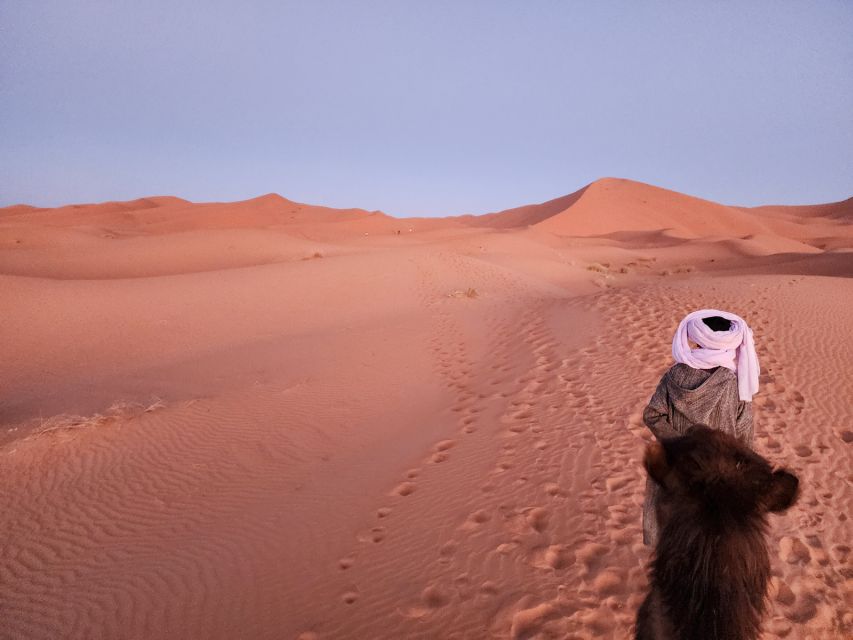
The camel ride carries you into the Erg Chebbi dunes. It is usually timed for sunset, and the pace is slow enough to take in the silence and the changing color of the sand. Camel riding can be uncomfortable if you are not used to the saddle, so wear practical clothing and avoid carrying loose items.
Sandboarding is included. You do not need to be an expert, though you should expect a simple recreational activity rather than a full lesson. If you want more speed and noise, quad bikes are available at camp for €50 for one person or €60 for two people for one hour.
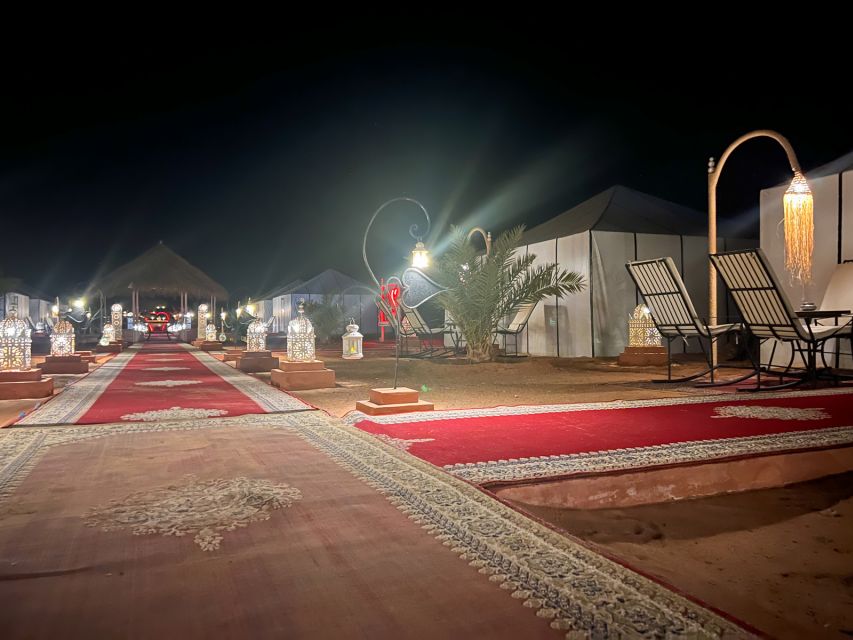
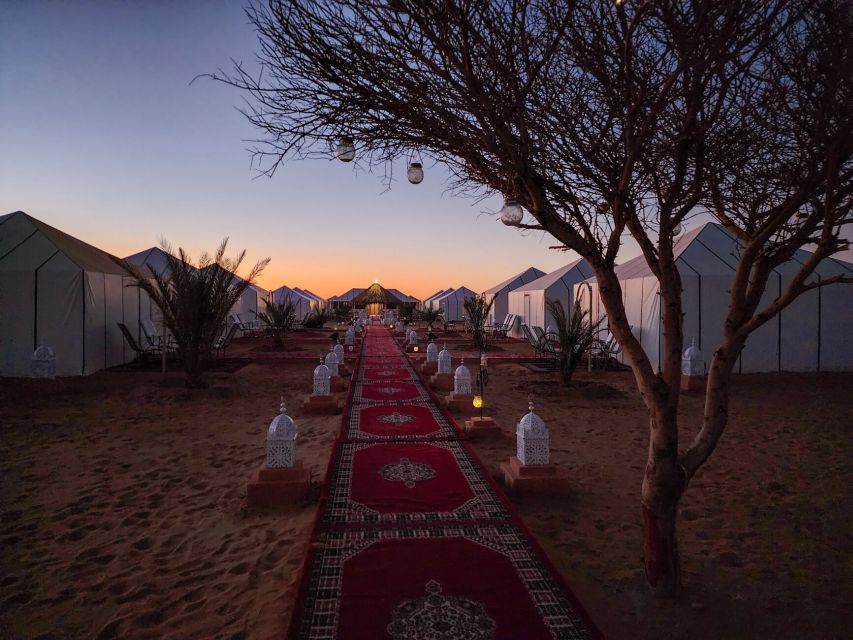
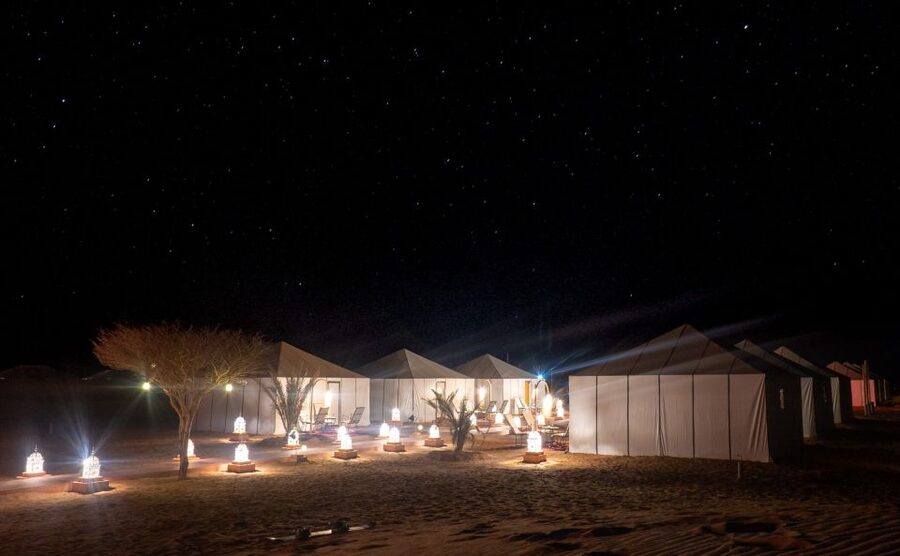
The camp has standard and luxury options, depending on what you select. A standard camp gives you the core desert experience, but facilities remain basic. Shared showers and toilets can be busy, and the tents do not have air-conditioning. That is normal for a desert camp, but it matters if you expect hotel-style comfort.
Luxury camping is the better choice if you want more privacy and a higher level of comfort. Still, the main attraction is outside your tent: the dunes, the night sky, dinner, and the music.
Dinner is included, followed by Berber music and a chance to try traditional clothing and henna. This can feel sociable in a shared camp, since several groups may eat and gather together. If you prefer a quiet private evening, ask about the camp category before paying.
Morning camel ride and the long return to Marrakech
After breakfast, you ride the camels back to Merzouga village. The return ride gives you a different view of the dunes, especially in the morning light. You can also return by ATV for an added charge if that option is available through the camp.
Day three is the hardest physically because of the distance. The route passes through desert country and acacia trees before crossing back toward the Atlas Mountains, then continues to Marrakech. Driving time is about 8 hours and 30 minutes, with arrival expected around 8:00 or 9:00 in the evening.
Plan for a late finish. This is not the day to schedule a flight, a tightly timed train, or an important dinner reservation in Marrakech. The advantage is that you see a broad section of southern Morocco without arranging another hotel or transport connection.
If you want to finish in Fes instead of Marrakech, that can be arranged for an additional €40 in cash. Private trips may also use the alternate route through Nkob, Tamnougalt, and Agdz, which can make the return more interesting and less repetitive.
What the $125 price really covers
At $125 per person, this is strong value if you want a compact desert trip from Marrakech. Included items cover:
- Hotel or riad pickup and drop-off
- Air-conditioned transport and WiFi
- A driver-guide
- One night in a private-bathroom room
- One night at the selected Erg Chebbi camp
- Two breakfasts and two dinners
- Camel rides to and from camp
- Sandboarding
- Luggage transfer by 4×4
- Berber music
- Access to a swimming pool at the accommodation
The price does not cover drinks, lunches, the Ait Ben Haddou guide, or quad biking. Shared-tour lunches can add about 120 Moroccan dirhams each. Those extra costs are predictable, so the tour remains good value as long as you budget for food during the day and any desert activities you add.
Private bookings cost more, but they include a licensed Ait Ben Haddou guide and lunch each day. You also gain more control over stops and can request places such as Telouat Kasbah or Ksar Taourirt. For a couple, family, or small group with specific interests, the extra flexibility may be worth it.
The guide makes a real difference
The driver-guide is central to this trip because so much time is spent on the road. Omar has been praised for keeping the journey lively and explaining Morocco along the way. Addi is known for being friendly, communicative, and attentive to the group. Said has been noted for answering questions and checking that everyone is comfortable.
Other named guides include Salah, Ayoub, Hicham, and Younes. Hicham was especially appreciated for safe driving, a comfortable minibus, and good stops. Ayoub was flexible about breaks, while Younes handled the route well and allowed extra stops on a private trip.
Of course, the exact guide depends on the departure date. The useful point is to expect a social, involved driver-guide rather than a silent chauffeur. If you need a break, feel uncomfortable, or want clarification about the schedule, speak up early.
Who should book this three-day desert trip?
I would choose this tour if you have limited time in Morocco and want the major southern sights in one package. It suits you if the idea of a long road trip sounds worthwhile because you want Ait Ben Haddou, Todra Gorge, a camel ride, and one night under desert skies.
It also works well for first-time visitors who prefer having transport, lodging, meals, and camp arrangements handled together. The route gives you a broad introduction to southern Morocco without requiring you to negotiate several transfers.
I would hesitate if you dislike long drives, basic camp bathrooms, or group schedules. The first and third days are heavy on driving, and Ait Ben Haddou may feel rushed on a shared departure. A private booking is the better choice if you want slower sightseeing, included lunches, and more say over the route.
Should you book it?
Book this experience if you want the Sahara as part of a short Marrakech visit and accept that the journey is as important as the destination. The strongest moments are the walk through Todra Gorge, the sunset camel ride, the desert night, and the contrast between mountain valleys and open dunes.
Skip it if you need polished hotel comfort or several hours at every stop. For most people who value scenery, culture, and a well-priced route, the package delivers a lot for $125. Choose the luxury camp or a private tour if comfort and flexibility matter more than keeping the cost low.
FAQ
Is lunch included on the tour?
Lunch is included on private bookings only. Shared bookings do not include lunch, and meals at set stops may cost about 120 Moroccan dirhams. Drinks and other beverages are also not included.
Is the guide at Ait Ben Haddou included?
A local guide at Ait Ben Haddou is not included on shared bookings. You can join a group guide for about €2 per person. Private bookings include a licensed guide.
What does the desert camp stay include?
You receive one night at your selected Erg Chebbi camp, along with dinner, breakfast, camel rides, sandboarding, luggage transfer by 4×4, and a Berber music show. Standard camps have basic shared facilities, while luxury camps offer a higher comfort level.
How much does quad biking cost?
Quad biking costs €50 for one person or €60 for two people for a one-hour ride in the dunes.
Can I finish the tour in Fes?
Yes. Ending in Fes is possible for an additional €40 paid in cash.
What should I bring?
Bring comfortable shoes, sunscreen, and comfortable clothing. A small overnight bag is also useful because your larger luggage is carried to and from camp by 4×4.
New quad and buggy rides around Marrakesh
- QUAD PALMERAIE MARRAKECH★ 5.0 · 14 reviews
- Quad biking in Marrakech’s desert palm grove★ 4.9 · 72 reviews
- Quad biking in Agafay Desert with lunch & Camel Ride & pool★ 4.5 · 186 reviews
- Quad biking adventure in Marrakech★ 4.9 · 11 reviews
- Quad bike and Lunch & Pool in Desert Marrakech Agafay★ 4.8 · 47 reviews
- From Marrakech: Full-Day Agafay Desert Quad Adventure★ 4.9 · 59 reviews
- Palmeraie Marrakech Camel Ride & Quad Bike Package Exprience★ 4.5 · 51 reviews
- Ourika Valley: Quad Biking,Camel Riding,and Hiking Adventure★ 4.8 · 24 reviews
Marrakech Quad Bike Tours, side by side.
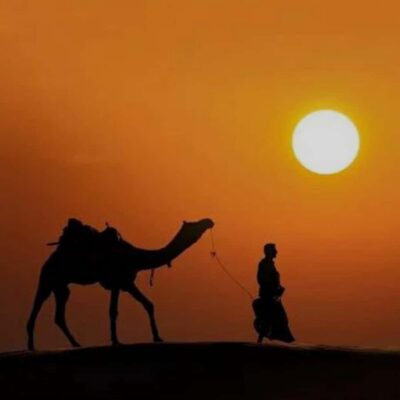
Agafay Desert Quad & Camel Rides with Dinner Show
Read our review →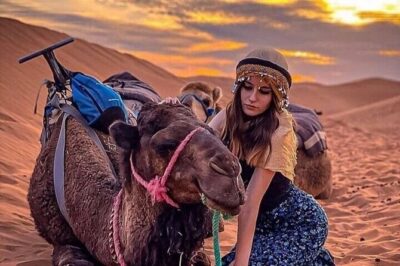
Agafay Desert Quad Biking Tour with Dinner-Show
Read our review →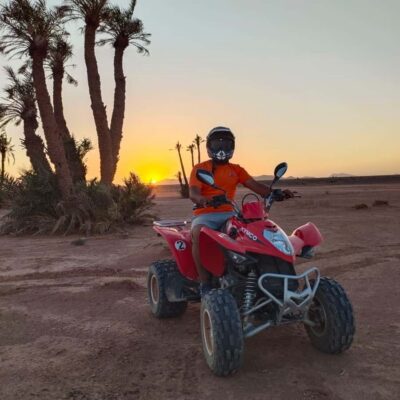
Quad Bike Tour to Palm Oasis and Jbilat Desert
Read our review →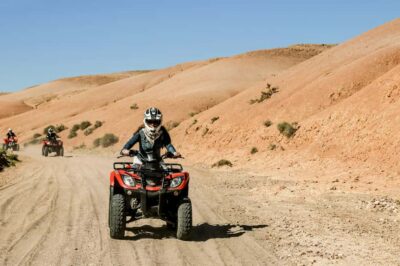
Marrakech Quad Bike Experience: Desert and Palmeraie
Read our review →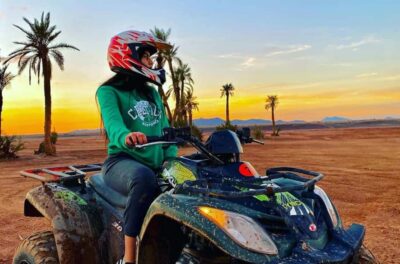
Dunes of the Palmeraie Quad Bike Ride with Tea
Read our review →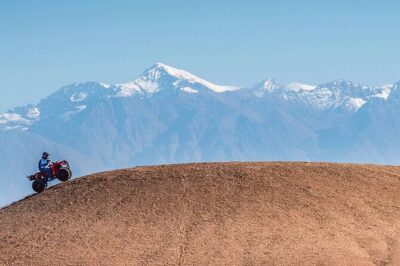
Agafay Desert Package, Quad Bike, Camel Ride and Dinner Show
Read our review →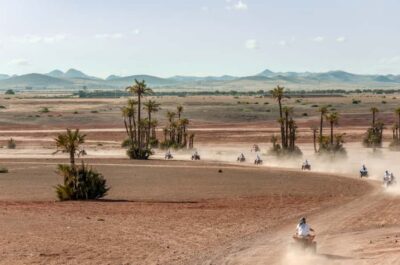
Marrakech Desert Quad and Camel ride, Lunch, and Poolside
Read our review →Lists this ride appears in